Why “Eat Less, Move More” Stops Working for Your Belly in Your 40s — and the Simple Daily Fix

If meals just sit heavier than they used to — fuller, slower, bloated an hour later — you are not imagining it. Somewhere in our 40s many of us quietly start unbuttoning the top button after dinner and wondering when our stomach changed the rules.
The reassuring part: there are real, well-understood reasons this happens in midlife, and once you understand them it is surprisingly manageable.
What actually changes in midlife digestion
- Fewer digestive enzymes. Enzyme output declines with age, so the same plate is broken down less efficiently — and ferments instead, which is what heavy and bloated feel like.
- Slower transit. Food lingers longer and ferments more, so some days feel fine and others do not.
- A less balanced microbiome. Gut diversity tends to decline, so food is handled less smoothly and produces more gas.

The small daily habit that supports most of it at once
Three of those shifts are internal — and they respond to the same simple thing: a little daily support. That is why we made Margaret: one small daily capsule for the way your gut changes in midlife.
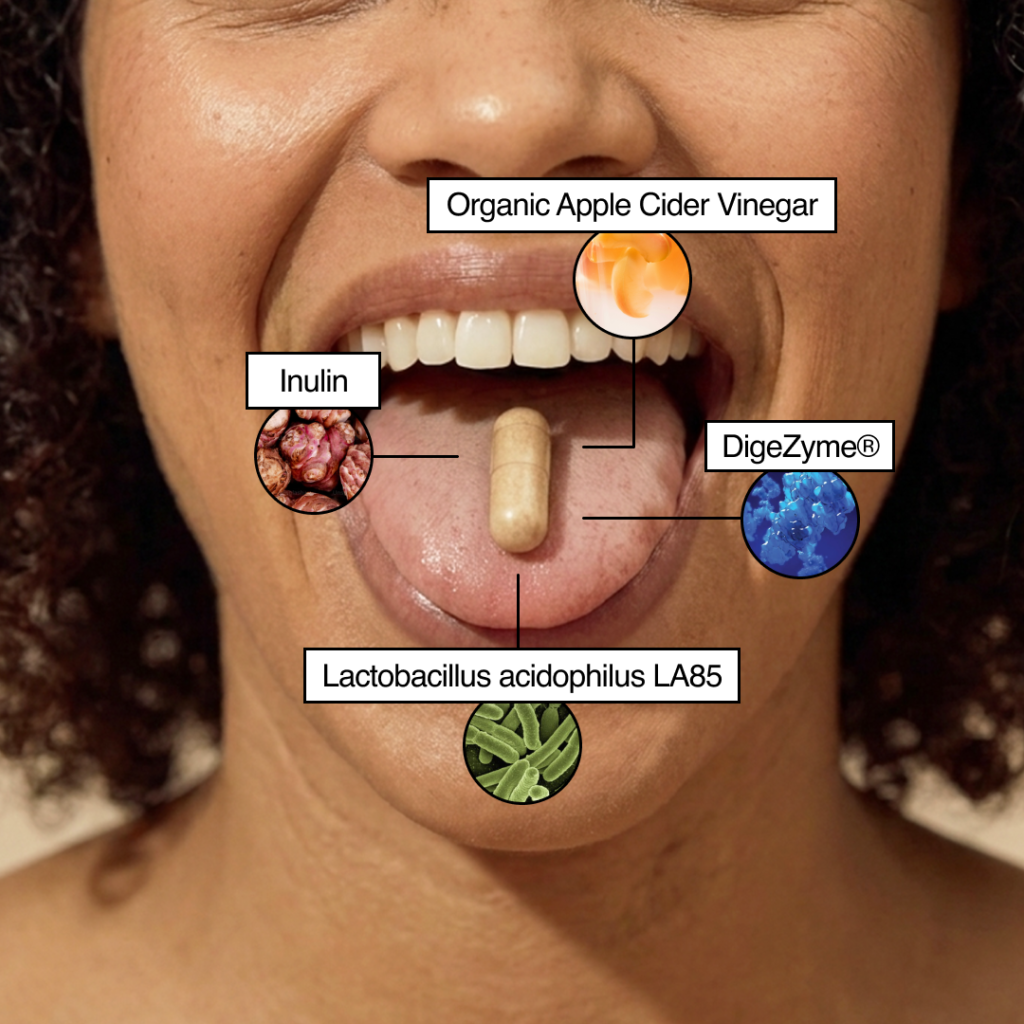
Apple cider vinegar (1,000mg), digestive enzymes (DigeZyme), and a live probiotic with prebiotic fiber — four jobs in one capsule, taken with a glass of water each morning. No sugar, no vinegar shot.